



Table of Contents
- Why Home Health Agencies Need Consulting Support
- Home Health Agency Startup Checklist and Licensing Requirements
- Superb Care, Inc.: State-Specific Expertise for Home Health Agencies
- Home Health Agency Policy and Procedure Manual Development
- Home Health Survey Preparation Consultant Services
- Home Health Agency Billing Consulting and Credentialing Support
- How to Choose the Right Consulting Partner for Your Agency
- Frequently Asked Questions
Last Updated: October 17, 2026
Why Home Health Agencies Need Consulting Support
Starting a home health agency means navigating complex state licensing, developing comprehensive policies, and building operational systems from scratch, a process that can derail even experienced healthcare professionals.
This is where ConsultAtlas alternatives home health agencies need becomes essential. Rather than learning regulations through trial and error, agencies benefit from expert guidance that accelerates licensure and sustainable operations. At Superb Care, Inc., we help professionals launch compliant agencies by handling regulatory complexity while they focus on care delivery.
Home Health Agency Startup Checklist and Licensing Requirements
Launching a home health agency requires completing specific steps in the right order; founders who tackle tasks out of sequence end up redoing work or missing deadlines.
State licensing requirements vary significantly. Florida, Georgia, and South Carolina each have distinct application processes, staffing mandates, and compliance standards, so agencies need guidance tailored to their location and service type.
A home health agency startup checklist should include:
- Legal business formation and tax registration
- State-specific licensing application preparation
- Development of policies and procedures manual
- Personnel file systems and staff documentation protocols
- Clinical documentation templates aligned to state standards
- Initial survey readiness assessment
- Financial and billing system setup
- Referral source outreach strategy
A consultant who understands your state’s requirements prevents delays and rejections. Many agencies submit incomplete applications the first time, extending their timeline by months.
Superb Care, Inc.: State-Specific Expertise for Home Health Agencies
Most agencies searching for a ConsultAtlas alternative want a partner whose scope, state coverage, and support model actually fit how a home health agency gets licensed and surveyed, not a different logo on the same generic package.
What ConsultAtlas is generally known for
ConsultAtlas is typically positioned as a consulting and compliance platform for healthcare agencies, focused on documentation templates, policy libraries, and guided workflows for licensing and accreditation.
That model works for agencies with in-house regulatory experience that mainly need a document starting point. It is a weaker fit for first-time owners who need someone to interpret their state’s licensing rules, build policies around actual workflows, and stay involved through survey readiness.
Where Superb Care, Inc. differs
Superb Care, Inc. is a hands-on consulting practice, not a self-service template library. The practical differences that matter to a home health agency are:
- State-specific interpretation, not just templates. We work in Florida, Georgia, and South Carolina and build policies and documentation around each state’s current licensing and survey expectations. A template library gives you a document; we give you a document that matches what your state surveyor will actually check.
- Implementation support, not just deliverables. We help you put the policies into practice, personnel file systems, clinical documentation workflows, staff training on compliance expectations, rather than handing over a manual and leaving implementation to you.
- A single accountable partner. Licensing, policy development, survey preparation, billing setup, and credentialing support are coordinated by one team instead of assembled from separate vendors or self-guided modules.
Where ConsultAtlas may be the better fit
A fair comparison has to acknowledge where a platform model wins. If your agency already has an experienced administrator or director of nursing who can interpret state rules independently, and you mainly need a policy library and documentation templates at a lower upfront cost, a platform-style tool can be a reasonable starting point, but regulatory interpretation, customization, and survey preparation still land on your team.
A simple fit test
Before choosing either path, answer these questions:
- Does anyone on your team have direct experience with your state’s home health licensing process and current survey standards?
- Do you need policies customized to your actual workflows, or will a template library suffice?
- Who will respond if a surveyor questions a policy during your initial survey?
- Do you need help with credentialing and billing setup, or only documentation?
- What is your realistic timeline, and can your team absorb the implementation work a self-guided tool requires?
If your answers point to needing interpretation, implementation, and survey support from one accountable partner, a hands-on engagement is the better fit. If you have in-house regulatory experience and mainly need a document starting point, a platform may suffice.
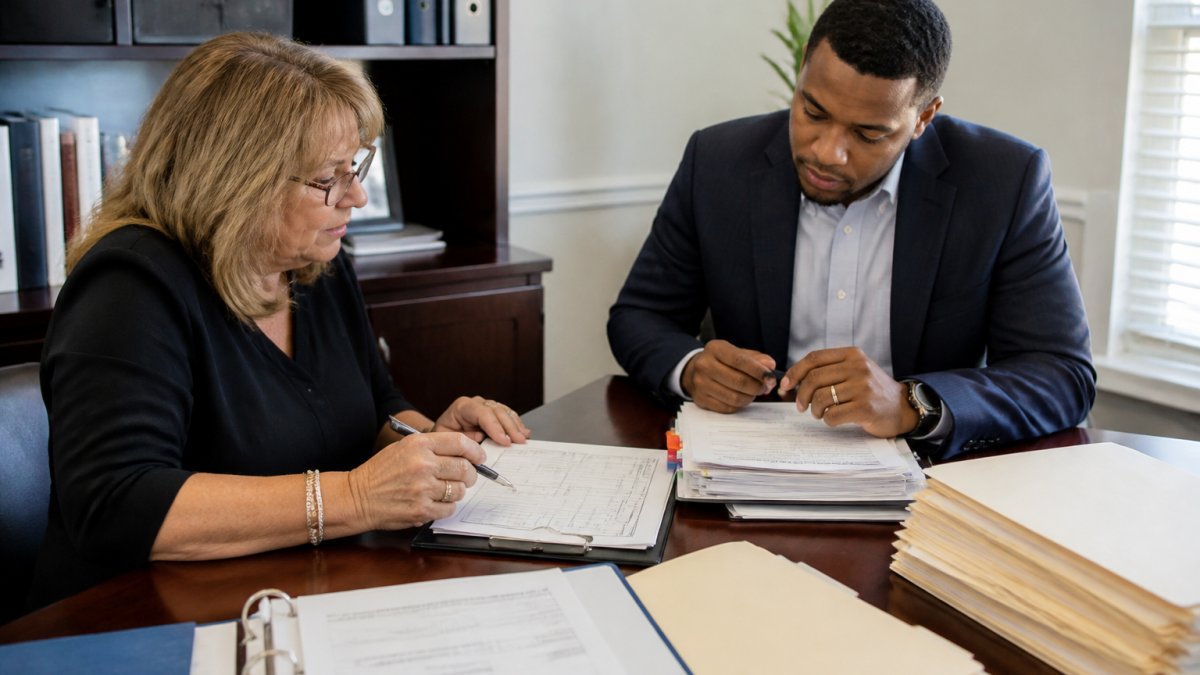
Ask any consulting partner, platform or practice, one direct question: “Who on your team will interpret my state’s current licensing rules and respond if a surveyor questions a policy?” The answer tells you whether you are buying a document library or an accountable partner.
Home Health Agency Policy and Procedure Manual Development
Your policies and procedures manual is not just a compliance checkbox, it’s the operational blueprint surveyors evaluate during licensing and annual surveys. Weak policies create deficiencies; well-developed ones demonstrate competent management.
Common mistakes include copying policies from other agencies without adapting them to your state’s rules, creating policies that don’t reflect actual operations, or leaving gaps in documentation standards and quality assurance, mistakes that surface during survey preparation and force last-minute rewrites.
Superb Care, Inc. develops policy manuals that address your state’s specific regulatory requirements while remaining practical to implement.
Policies written by someone unfamiliar with your state’s standards often miss critical requirements. When a surveyor identifies missing policies during your inspection, you’re already behind on compliance. Prevention through proper development is far more cost-effective than remediation after survey findings.
Home Health Survey Preparation Consultant Services
State surveys are the critical evaluation point for home health agencies. Surveyors assess whether your agency meets licensing standards, maintains adequate staffing, provides quality care, and operates compliant systems.
Effective survey preparation requires understanding what surveyors actually look for.
Many agencies wait until survey notification arrives, when it’s too late to address systemic issues.
A survey preparation consultant helps you identify compliance vulnerabilities before the state does, reviewing personnel files, ensuring clinical documentation meets standards, verifying staff competency, and confirming policies align with actual practice.
Home Health Agency Billing Consulting and Credentialing Support
Medical billing errors directly impact revenue.
Credentialing, enrolling with insurance plans and government programs, is equally critical. Incomplete applications delay your ability to bill, and errors can cause rejection and reapplication delays.
Billing consulting covers coding accuracy, documentation requirements for different payer types, claim submission, and denial prevention. Credentialing support handles enrollment applications, credential verification, and payer follow-up.
A common mistake is assuming your billing staff will figure out coding and credentialing independently.
How to Choose the Right Consulting Partner for Your Agency
Choosing a ConsultAtlas alternatives home health consulting partner is a significant decision, but most buyers compare marketing language instead of deliverables, timelines, and total cost. The scorecard below makes a ConsultAtlas alternative, or any partner, comparable on what actually affects your launch.
Evaluation scorecard
Score each criterion from 1 (weak) to 5 (strong) for every partner you consider. A partner that scores below 3 on state-specific interpretation or implementation support is a poor fit for a first-time agency owner.
| Criterion | What to verify | Why it matters |
|---|---|---|
| State-specific licensing support | Direct experience with your state’s current application, staffing mandates, and survey focus areas | Generic guidance causes application rejections and rework |
| Policy and procedure development | Whether policies are customized to your workflows or delivered as templates | Surveyors look for alignment between written policy and actual practice |
| Survey readiness | A structured readiness assessment with identified deficiency risks | Proactive preparation is far cheaper than post-survey remediation |
| Accreditation preparation | Support for accreditation standards if you pursue them | Accreditation affects payer contracts and referral relationships |
| Billing and credentialing support | Whether coding, documentation, and payer enrollment are included or add-ons | Revenue leakage starts at launch if billing is set up poorly |
| Implementation support | Hands-on help putting policies and systems into practice | A report without implementation leaves the work on your team |
| Post-launch support | What continues after licensure, compliance monitoring, survey help, policy updates | Regulatory changes and annual surveys do not stop at launch |
| Pricing transparency | Itemized scope, what is included, and what costs extra | Vague pricing hides the true total cost of ownership |
What actually drives pricing
Consulting fees vary widely because scope varies widely. The main cost drivers are:
- State and licensing pathway. States with more complex application processes and staffing mandates require more preparation time.
- Agency type. A Medicare-certified home health agency, a hospice, and a private-duty non-medical agency have different regulatory requirements and documentation burdens.
- Scope of deliverables. Policy development, personnel file systems, clinical documentation templates, survey readiness, billing setup, and credentialing are separate workstreams, a low headline fee often excludes several.
- Implementation involvement. Partners who help implement charge more than partners who deliver documents, but implementation is where most first-time agencies get stuck.
- Ongoing support. Post-launch compliance monitoring and survey support are usually priced separately or as a retainer.
When comparing proposals, ask for an itemized scope and a written list of exclusions. The lowest quote is frequently the one with the most exclusions.
Typical implementation timeline and milestones
A realistic launch engagement follows a sequence, and each milestone depends on the previous one being complete:
- Business formation and service model (weeks 1-2). Legal entity, tax registration, and a defined service model.
- State licensing application preparation (weeks 2-6). Application package, supporting documentation, and alignment with state staffing mandates.
- Policy and procedure manual (weeks 3-8). Policies built around your workflows and your state’s requirements.
- Personnel files and documentation systems (weeks 4-8). Staff documentation protocols and clinical documentation templates.
- Survey readiness assessment (weeks 6-12). Deficiency risk review and corrective actions before the survey.
- Billing and credentialing setup (weeks 4-12, often parallel). Payer enrollment and clean-claim documentation standards.
- Post-launch support (ongoing). Compliance monitoring, policy updates, and survey support.
Timelines shift based on state processing times and how quickly your team completes assigned tasks. A good partner gives you a written milestone plan with agency responsibilities spelled out, not just a start date.
Questions to ask before signing
- Who specifically will interpret my state’s current licensing rules, and what is their experience with my state’s surveys?
- Which deliverables are included, and which are billed separately?
- What does post-launch support include, and for how long?
- What happens if my application is rejected or my survey finds deficiencies?
- Can you provide references from agencies in my state and my agency type?
Superb Care, Inc. answers these questions directly. We specialize in home health and assisted living agencies in Florida, Georgia, and South Carolina, provide hands-on implementation support, stay current on state regulatory changes and survey standards, and are licensed, bonded, and insured.
The right consulting partner prevents costly compliance mistakes, and positions your agency for growth. Use the scorecard above to compare partners on state-specific support, implementation, pricing transparency, and post-launch support, the criteria that separate an accountable partner from a document library.
Frequently Asked Questions
What should a home health agency look for in a consulting firm?
A qualified home health consulting firm should offer state-specific licensing expertise, experience with your agency type (medical, non-medical, or private duty), and proven support through the entire startup process from application through survey readiness. Verify they are licensed, bonded, and insured. Ask about their experience with regulatory compliance, policy development, and post-launch support. Request references from agencies in your state to confirm they understand local requirements and can deliver results.
How can a new home health agency get help with startup requirements?
Partner with a consulting firm that provides end-to-end support including home health agency startup checklist completion, licensing application preparation, policy and procedure manual development, and staff documentation setup. A strong consultant will guide you through state-specific requirements, help establish internal systems for compliance, and prepare you for your initial survey. This structured approach reduces delays and prevents costly deficiencies that could delay your license approval.
Can a consultant help with home health agency billing consulting and credentialing?
Yes. Experienced home health agency billing consulting includes medical billing guidance, provider credentialing support, and claim optimization strategies. A consultant can help you establish billing systems, ensure accurate coding to prevent claim denials, and manage credentialing with Medicare, Medicaid, and private payers. This support is critical to avoiding revenue loss from billing errors or enrollment delays.
How do I compare home health consulting firms to find the best fit?
Evaluate firms on state-specific expertise, years of consulting experience, range of services (licensing, policy development, survey preparation, billing), and post-launch support availability. Ask whether they work with your specific agency type and service model. Request pricing transparency and confirm they have experience with agencies at your stage of growth. Check for licensing, bonding, and insurance verification. Compare response times and availability, you need a partner who is accessible when issues arise.