


Quick Summary
Assisted living training requirements for 2026 are set mainly by each state’s licensing agency, not by a single federal standard. Hours, deadlines, and topics such as dementia care differ by role and state, so operators should verify the cited rule text for each state they serve.
- Assisted living training rules are set mainly at the state level, so federal standards rarely apply.
- Initial training deadlines are usually measured from the employee’s hire date, not the calendar year.
- Administrators, direct-care staff, and medication aides often face different hour counts and topic lists.
- Pull hour counts from the cited statute or rule, not from vendor marketing or other manuals.
- Keep proof of completion for every employee in a central file, since unrecorded courses count as missing during surveys.
Table of Contents
- Why Staff Training Requirements Matter for Assisted Living Licensing
- Federal Baseline Requirements for Assisted Living Staff Training
- State-by-State Assisted Living Staff Training Requirements for 2026
- Mandatory Dementia Care Training Hours and Topics
- Role-by-Role Training Requirements: Administrators, Direct-Care Staff, and Medication Aides
- Documenting Staff Training for Surveys and License Renewal
- Building Your Assisted Living License Renewal Checklist for 2026
- Next Steps: Getting Your Staff Training Plan Reviewed Before Your Application
- Frequently Asked Questions
What Are the 2026 Assisted Living Staff Training Requirements?
Last Updated: October 30, 2026
Why Staff Training Requirements Matter for Assisted Living Licensing
Assisted living training requirements for 2026 are set mostly by state licensing agencies, and they determine whether a facility can open, renew, and pass survey, so every operator should map the assisted living training rules for their state before scheduling a single course.
Training records are one of the first things surveyors review. A facility can have capable staff and still struggle if it cannot show that each employee completed required hours on schedule and covered the required topics.
Federal Baseline Requirements for Assisted Living Staff Training
Assisted living is regulated primarily at the state level, so there is no single federal training hour standard that applies to every facility. Federal rules matter mainly where a facility also participates in federal programs.
To verify the federal baseline for your situation, review the Centers for Medicare & Medicaid Services long-term care resources and confirm which rules apply to your facility type.
State-by-State Assisted Living Staff Training Requirements for 2026
Training hours, deadlines, and course topics for assisted living training are set by each state’s licensing agency, and they change between rule versions. The table below is a 2026 starting point for Florida, Georgia, and South Carolina; treat every figure as a value to verify against the current rule text before you build a training calendar. Where a state delegates detail to rule or statute, the citation column points you to the primary source.
| State | Regulator | Initial training (direct-care staff) | Recurring training | Dementia-specific requirement | Verify against |
|---|---|---|---|---|---|
| Florida | Agency for Health Care Administration (AHCA), Bureau of Health Facility Regulation | Core competency training completed before independent resident contact, with the balance finished within the first 30 days of hire | Annual in-service hours set by rule; confirm the current count for your license type | Dementia and mental health topics are built into the core curriculum; confirm the current hour split | Florida Administrative Code and AHCA’s assisted living facility resources |
| Georgia | Georgia Department of Community Health, Healthcare Facility Regulation Division | Orientation and initial training tied to the employee’s role and the facility’s license category | Annual continuing education hours by role | Dementia care is a required topic area; confirm whether it is standalone or folded into the annual hours | Georgia Rules and Regulations and DCH provider guidance |
| South Carolina | South Carolina Department of Public Health (formerly DHEC), Division of Health Licensing | Initial training before or shortly after hire, with role-specific modules | Annual in-service hours by staff category | Dementia training is required for staff with direct resident contact; confirm the hour minimum | South Carolina Code of Regulations and DPH licensing guidance |
How to read the matrix
- Hours are role-dependent. A personal care aide, a medication aide, and an administrator in the same building can face three different hour counts. Do not apply one number to the whole staff.
- Deadlines run from the hire date, not the calendar year. Most states measure initial training from the employee’s start date and recurring training from the anniversary of completion. Build your tracker around hire dates.
- Citations beat summaries. When a state rule and a state agency FAQ disagree, the rule text controls. Keep a copy of the cited section in your compliance file so a surveyor can see the basis for your schedule.
Do not copy hour counts from another operator’s policy manual or from a training vendor’s marketing page. Vendors often quote the strictest state they serve. Pull the number from the statute or rule cited above and date-stamp your source.
What changes in 2026, and what is only proposed
Some state legislatures consider assisted living workforce bills that can change training requirements. A bill that has been introduced is not a requirement; only an enacted rule or statute with an effective date is. Before you change your training calendar for 2026, confirm three things: (1) the bill or rule has been enacted, (2) it has an effective date that falls in your compliance window, and (3) your state agency has issued implementation guidance.
Build your 2026 training calendar from the cited rule text for each state, not from a summary. Date-stamp every source you rely on, and re-check the matrix before each license renewal.
For a practical walkthrough of survey readiness, see our guide on how to prepare for an assisted living survey.
Mandatory Dementia Care Training Hours and Topics
Dementia care training is among the most common requirements surveyors look for in assisted living. Facilities should confirm which staff must complete dementia-specific training, how many hours apply, and which topics the course must cover, such as recognizing behavioral changes, effective communication, and resident safety. Many operators find it easiest to bundle dementia coursework into initial onboarding so it is finished early.
Role-by-Role Training Requirements: Administrators, Direct-Care Staff, and Medication Aides
Many state rules apply different hour counts, topic lists, and deadlines to different roles, and surveyors generally check that each employee’s file matches the role they actually perform. Confirm the exact figures against your state’s cited rule.
Administrators
- Initial training. Administrators typically face a pre-licensure course or a specified number of clock hours in administration, resident rights, and regulatory compliance before they can be named administrator of record. Some states require a passing exam in addition to the course.
- Recurring training. Annual continuing education hours are common, often with a subset dedicated to updates in licensing rules.
- Documentation. Keep the course certificate, exam result, and the date the administrator was named on file. A change of administrator usually triggers a notification to the licensing agency, so pair the training record with the notification.
Direct-care staff (personal care aides, resident assistants)
- Initial training. Orientation plus a set number of pre-service or post-hire training hours, with a deadline measured from the hire date (commonly within the first 30 to 90 days, depending on the state).
- Recurring training. Annual in-service hours, often split across required topic areas such as infection control, resident rights, and abuse and neglect reporting.
- Dementia training. Usually a required component for anyone with direct resident contact; confirm whether your state counts it inside the annual hours or as a separate requirement.
Medication aides and staff who assist with self-administration
- Initial training. A dedicated medication assistance course, often longer than general orientation, covering the state’s rules on assistance versus administration, documentation, and error reporting.
- Scope limits. Training should match what staff are actually permitted to do. Assisting a resident with self-administration is a different task from administering medication, and the training and supervision requirements differ.
- Recurring training. Annual medication-specific refresher hours, plus competency checks in many states.
- Documentation. Keep the course certificate, the competency check, and the delegating nurse’s or supervisor’s sign-off together in the employee file.
Nurses, temporary staff, and contractors
- Nurses. A licensed nurse’s clinical training does not automatically satisfy the facility’s orientation and in-service requirements. Most states still require facility-specific orientation and annual in-service hours.
- Temporary and agency staff. Orientation and required training usually apply before the worker has resident contact, even for a short assignment. Confirm who is responsible, the agency or the facility, and document the handoff.
- Contractors with resident contact. Therapists, activity contractors, and others who interact with residents may fall under orientation and abuse-reporting requirements even if they are not employees. Check the rule’s definition of “staff.”
Build a one-page role matrix for your facility: role, required initial hours, deadline from hire date, annual hours, and required topics. Attach it to every offer letter so the employee knows the schedule from day one, and file the signed copy.
Why the role breakdown matters for surveys
The most common survey finding in this area is not a missing course, it is a course that does not match the role. A medication aide who completed general orientation but not the medication-specific module, or a new administrator whose course certificate is on file but whose exam result is not, will read as a gap.
For a practical walkthrough of survey readiness, see our guide on how to prepare for an assisted living survey.
Documenting Staff Training for Surveys and License Renewal
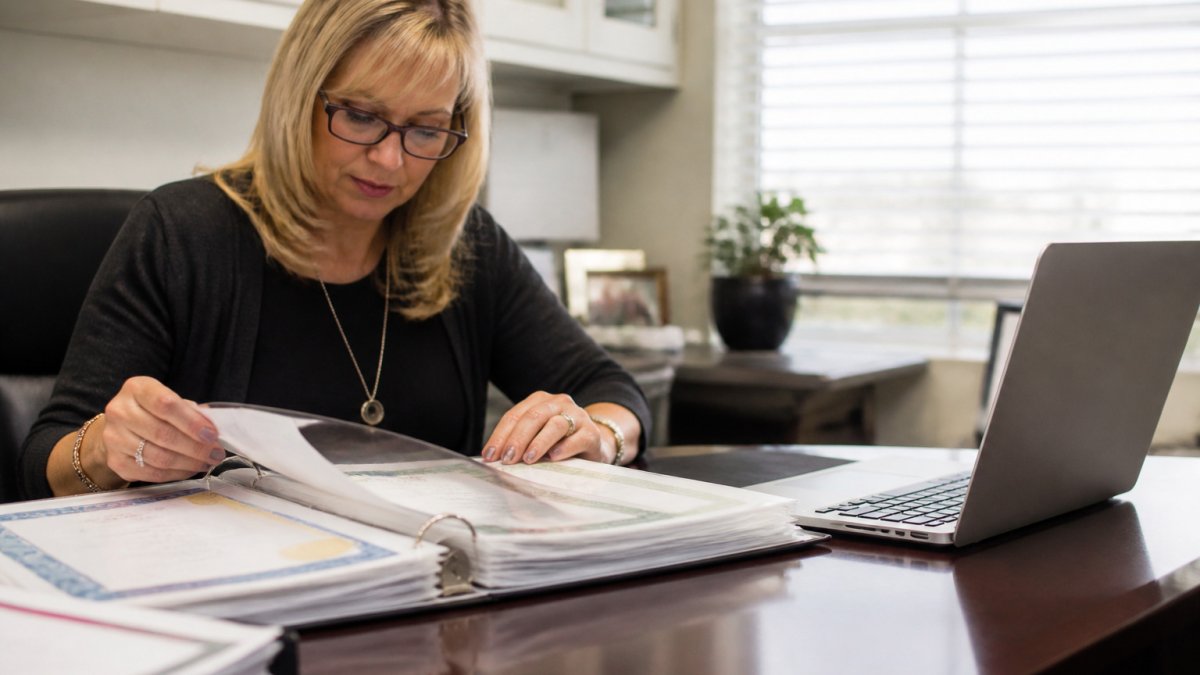
Surveyors expect proof of completion, not just a belief that training happened. Keep certificates, sign-in sheets, course completion records, and dated transcripts in a central file for each employee. Watch out: a course that was completed but not recorded in the employee file often counts as missing during a survey.
For a practical walkthrough of survey readiness, see our guide on how to prepare for an assisted living survey.
Building Your Assisted Living License Renewal Checklist for 2026
Before renewal, confirm that every employee is current on required hours, every role has the correct course topics, and all documentation is organized. A full renewal checklist lets you work through each item alongside the training requirements above. Use a checklist that includes state rule citations, training deadlines by employee, and any dementia or medication training requirements. Review the list at least 60 days before your renewal date so there is time to close gaps.
Next Steps: Getting Your Staff Training Plan Reviewed Before Your Application
Before submitting a license application, have your staff training plan reviewed against the current state rules. If you are ready to move forward, this step-by-step guide to opening an assisted living facility in Florida walks through the full process. Once your plan is ready, see how to speed up the facility license application. You can also get expert assistance with the licensing process so your training plan is reviewed before you apply.
Frequently Asked Questions
What are the mandatory training hours for assisted living staff in 2026?
Required hours depend on the state and the staff member’s role, so there is no single federal number that applies everywhere. Florida, Georgia, and South Carolina each set their own initial orientation and annual in-service hour requirements for assisted living staff. Before hiring, confirm the current figures with your state licensing agency, because proposed changes can differ from enacted rules. Superb Care, Inc. can help you map the requirements for your specific facility and staff roles during the licensing process.
How do state-specific dementia training requirements differ for assisted living facilities?
States differ in how many dementia-specific training hours they require, when staff must complete them, and which staff roles must take the course. Some states require initial dementia training during orientation and recurring training each year, while others set requirements only for direct-care staff. Review your state’s rules for hours, topics, and deadlines, and keep course completion records for each employee. Superb Care, Inc. can help you identify which dementia training rules apply to your facility.
What documentation is required to prove staff training compliance during a survey?
Surveyors generally expect signed training records that show each employee’s name, the course title, the date, the number of hours completed, and the instructor or training provider. Keep certificates of completion, sign-in sheets for in-service sessions, and a training log that tracks each staff member’s initial and annual requirements. Store these records where they can be produced quickly during an inspection. Superb Care, Inc. can help you set up a documentation system that fits your state’s survey expectations.
How often must assisted living staff complete annual in-service training?
Annual in-service training requirements vary by state, and many states set a minimum number of hours per calendar or licensing year for each staff member. Some states also require specific topics, such as dementia care or medication assistance, within that annual total. Track each employee’s training dates against your state’s deadline so no one falls out of compliance during the year. Superb Care, Inc. can help you build an annual training calendar for your facility.
Superb Care, Inc. supports operators in Florida, Georgia, and South Carolina with licensing applications, policy development, and survey preparation. Contact us to review your training plan before your next filing.
