



Last Updated: November 9, 2026
Quick Summary
Assisted living facility licensing requirements in Georgia are set by the Georgia Department of Community Health and apply to residences that provide housing, meals and personal care to adults who need help with daily living. Applicants must confirm their facility category, secure a compliant building, submit a complete application, pass a pre-licensure inspection and receive a license before admitting any resident.
- Confirm your facility category first, since it determines the application packet, staffing plan and building standards.
- Measure resident rooms, bathrooms and egress paths against the rule text before signing a lease or purchase.
- Respond promptly to state deficiency notices, because missing the response window can push your file to the back of the queue.
- Do not admit any resident until the license has been issued, as admitting early is treated as operating without a license.
- Audit staff files, training records, incident logs and fire-safety documentation before renewal, since these are most often cited in surveys.
Table of Contents
- What Counts as an Assisted Living Community in Georgia
- Georgia Licensing Authority and the Rules That Govern You
- Step-by-Step Application and Initial Licensure Process
- Administrator Qualifications, Training and Certification
- Personal Care Home Application GA: How It Differs
- Building, Bedroom and Resident-Space Standards
- Keeping Your License Current: Renewal Checklist for 2026
- Booking Your Licensing Consultation With Superb Care, Inc.
- Frequently Asked Questions
What Counts as an Assisted Living Community in Georgia
The assisted living facility licensing requirements in Georgia are set by the Georgia Department of Community Health, and they apply to any residence that provides housing, meals and personal care to adults who need help with daily living (Personal Care Homes).
The defining feature is that residents receive personal care services such as bathing, dressing, medication assistance and supervision, in a setting that is not a hospital or skilled nursing facility. Many new operators find the scope clearer once they see that the license covers the service, not just the building.
Assisted living communities versus personal care homes
The distinction that trips up most applicants is the difference between an assisted living community and a personal care home. Both serve older adults and both provide help with daily living, but the regulatory scope, the number of residents and the staffing expectations differ. A common mistake is assuming a small residence automatically falls into the simpler category. The number of residents and the services offered usually decide the classification, so confirm it before you spend money on a floor plan.
Georgia Licensing Authority and the Rules That Govern You
Licensing authority for these facilities sits with the Georgia Department of Community Health, Healthcare Facility Regulation division (Personal Care Homes). The governing rules are published as Georgia Administrative Code provisions, and they are revised periodically, so the version you read today may not be the one that applies when you file.
We recommend building a compliance binder that mirrors the rule chapters. Organizing your documents by rule makes both the initial application and later inspections far less stressful, and it gives your administrator a single place to look when a question arises.
Step-by-Step Application and Initial Licensure Process
The application process for assisted living facility licensing requirements in Georgia moves in a predictable sequence, though timelines vary with the completeness of your submission and the state’s current workload. For the fuller step-by-step guide to starting an assisted living facility, see step-by-step guide to starting an assisted living facility. What separates a smooth filing from a stalled one is knowing which documents the reviewer expects at each stage and preparing them before you are asked. Expect the following stages:
- Confirm your facility category and the rules that apply to it. The category determines the application packet, the staffing plan and the building standards. Resolve this before any other step, because switching categories mid-application usually means starting over.
- Secure a suitable building that meets the space and safety standards before you commit to a lease or purchase. Measure resident rooms, bathrooms, common areas and egress paths against the rule text. A building that cannot be brought into compliance is the most expensive mistake in the process.
- Prepare the license application, along with ownership disclosures, floor plans and staffing plans. Ownership disclosures typically require identifying every owner, officer and managing entity, and the state may request background information on each. Floor plans should be drawn to scale and labeled by room use.
- Submit the application and respond promptly to any deficiency notices from the state. Deficiency notices usually come with a response window; missing it can push your file to the back of the queue. Assign one person to own the correspondence log.
- Complete the pre-licensure inspection, correcting anything the surveyor flags. The surveyor checks the physical plant, the administrator’s credentials and the policy manual against the rule chapters. Have your compliance binder organized by rule so you can produce any document on request.
- Receive your license before admitting any resident. The license is the legal authority to operate; nothing else substitutes for it.
Watch out: admitting residents before the license is issued is treated as operating without a license, and the consequences can include penalties and a delayed opening. Hold your admission schedule until the license is in hand.
A practical way to keep the file moving is to build a submission checklist that mirrors the state’s application packet.
The application moves through six stages, each with a clear action and timing expectation.
| Step | What to do | Time or frequency |
|---|---|---|
| Confirm facility category | Determine the category and the rules that apply | Before any other step |
| Secure a suitable building | Measure rooms and egress against the rule text | Before lease or purchase |
| Prepare the application | Assemble ownership disclosures, floor plans and staffing plans | Before submission |
| Submit and respond to deficiencies | File the application and answer state notices | Within the response window |
| Complete pre-licensure inspection | Correct anything the surveyor flags | Before licensure |
| Receive the license | Admit residents only after the license is issued | Before any admission |
Administrator Qualifications, Training and Certification
Every facility needs a qualified administrator, and Georgia sets specific education, experience and training expectations for that role. The administrator is the person the state holds accountable for day-to-day compliance, so the qualification requirements are not a formality.
Georgia administrator certification generally involves completing a required pre-licensure training program and passing the examination, followed by continuing education. Confirm the current course hours and approved providers directly with the state, since these details change.
Personal Care Home Application GA: How It Differs
If your plans fall into the personal care home category, the application follows a different track with its own forms, staffing ratios and building expectations.
A practical decision guide looks like this:
- Start with resident count. A small residence serving a handful of adults is generally evaluated under the personal care home framework, while a larger community serving more residents is evaluated as an assisted living community. Confirm the current threshold in the rule text, because the number that separates the categories is the single most important fact in your filing.
- Then look at the services. If residents receive personal care such as bathing, dressing, medication assistance and supervision, both categories can apply. If the proposed services drift toward skilled nursing or memory care beyond what the category permits, neither license covers the plan as written.
- Then check the building. Personal care home standards and assisted living community standards differ in room sizes, bathroom ratios and common-area requirements. A floor plan built for one category may not pass the other.
Applicants who start on the wrong track often lose weeks of work. Verify the category first, then gather the forms specific to that category rather than adapting an assisted living packet.
Watch out: assuming a small residence automatically falls into the simpler category is a common error; the services offered can pull a small building into the more demanding framework.
Building, Bedroom and Resident-Space Standards
Physical standards cover resident bedrooms, bathrooms, common areas, fire safety and accessibility. Rules typically specify minimum private room sizes, egress requirements and the layout of resident spaces, and surveyors check these closely during the pre-licensure inspection.
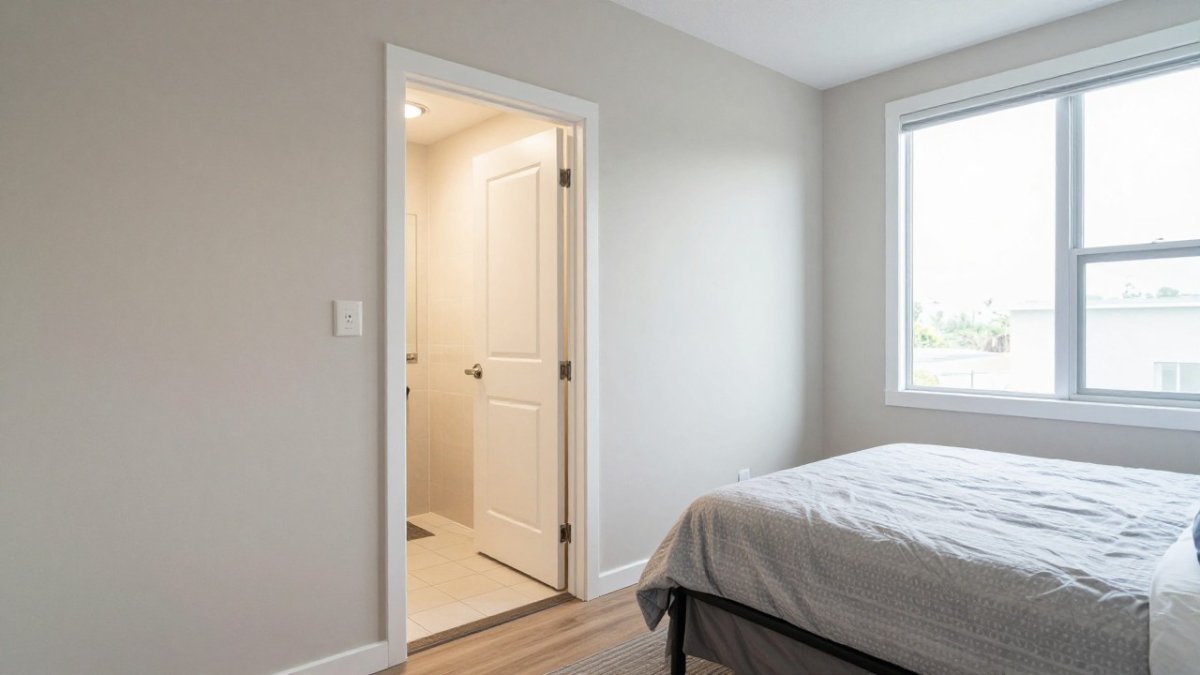
A practical tip: measure every room yourself against the rule text before you finalize construction drawings. Renovating after a failed inspection costs far more than getting the layout right at the start.
Keeping Your License Current: Renewal Checklist for 2026
Your license is not permanent. Renewal, change-of-ownership and relocation each carry their own procedures, and missing a renewal date can force you to restart the process. Keep a calendar of your renewal deadline, the documents the state requires, and the inspection timeline.
For 2026 renewals, verify each item against the current state checklist before you submit. To see how to get ready for the survey itself, read how to prepare for an assisted living survey.
Booking Your Licensing Consultation With Superb Care, Inc.
Navigating Georgia’s licensing rules takes time, and mistakes in the application or the building plan are expensive to correct. Superb Care, Inc. provides licensing consultation, application support and policy development for operators across Georgia, Florida and South Carolina. Our team is licensed, bonded and insured. You can review our home care organization licensing support in Charlotte County to see how we help with applications.
Contact Superb Care, Inc. to schedule a consultation and get your Georgia assisted living project on a clear path to licensure.
Frequently Asked Questions
What are the regulations for assisted living in Georgia?
Assisted living communities in Georgia are regulated by the Georgia Department of Community Health, Healthcare Facility Regulation division, under its rules and regulations for personal care homes. Operators must meet requirements covering licensure, administrator qualifications, staffing, background checks, building and resident-space standards, resident rights, medication assistance and incident reporting. Compliance is verified through inspections, so keeping thorough records and reviewing current rule text before you apply reduces the risk of deficiencies.
How do I apply for an assisted living facility license through the Department of Community Health?
Start by confirming your facility category, then submit a complete license application to the Department of Community Health with the required forms, ownership disclosures, floor plans and administrator documentation. Pay the applicable fee and schedule the initial inspection once your file is complete. Applications with missing forms are returned, which can add weeks to your timeline, so use a written checklist and confirm each item against the current rule text before submission.
What is the difference between a personal care home and an assisted living community?
In Georgia, both are residential settings licensed under the same state framework, but they differ in the level of care and services they are permitted to provide and in the licensing category assigned. Assisted living communities typically serve residents who need more hands-on personal care and support, while personal care homes serve residents with lower care needs. Confirm your category with the Department before drafting your application, because the category determines staffing, building and service requirements.
Are there specific training requirements for assisted living administrators?
Yes. Georgia requires administrators of licensed residential care settings to meet minimum education and experience standards and to complete pre-licensure training and a written examination before they can serve. Administrators must also complete continuing education to maintain their qualification. Confirm the current hours, approved program providers and examination scheduling with the Department, since these requirements are updated periodically.
How often must an assisted living facility renew its license?
Georgia facility licenses are issued for a set term and must be renewed before expiration, with renewal applications, fees and any required documentation submitted within the timeline set by the Department. Missing the renewal window can disrupt operations, so calendar the deadline early and begin assembling documents at least several weeks in advance. Review inspection findings from the prior survey to correct any repeat deficiencies before renewal.
What are the physical plant requirements for assisted living facilities?
Physical plant requirements cover building construction, fire safety, accessibility, bedroom size and privacy, bathroom access, common areas and emergency systems. Bedrooms must provide the minimum usable floor area and private living space the rules specify, and the building must pass fire and life-safety review. Because these standards depend on building type and occupancy, have floor plans reviewed against the current rules before construction or renovation begins.
What is the minimum age and education requirement for a facility administrator in Georgia?
Georgia rules set minimum age and education criteria for facility administrators, including a minimum age requirement and a high school education or equivalent, along with qualifying experience and training. Applicants should document education, experience and training in a format the Department accepts. Verify the current criteria against the rule text, since changes to administrator qualifications affect who can be designated on a license application.
What should I do to prepare for a licensing inspection?
Prepare by reviewing the rules that apply to your category, walking the building against the physical plant standards, confirming personnel files include background checks and training records, and checking that resident records, medication practices and incident logs are complete. Common deficiencies include incomplete personnel records, missing policies and inaccurate recordkeeping. Conducting an internal mock inspection before the state visit helps surface these gaps early.
